
What is the Atlas of MS?
The Atlas of MS is the most comprehensive worldwide study of the epidemiology of MS and the global availability and accessibility of resources for people with MS.
| Country of Interest:
|
||||
| Access to rehabilitation or other therapies for symptom management | Rehabilitation or therapy available in country of interest? | World Bank category Upper middle income | WHO region European | Global results |
|---|---|---|---|---|
| % of countries reporting people can access rehabilitation or other therapies for each symptom | ||||
| Fatigue | data not known | 54% | 75% | 59% |
| Heat sensitivity | data not known | 21% | 35% | 25% |
| Difficulty walking | data not known | 96% | 95% | 93% |
| Stiffness and spasms | data not known | 93% | 95% | 91% |
| Bladder problems | data not known | 68% | 85% | 73% |
| Memory and other cognitive problems | data not known | 57% | 68% | 57% |
| Pain and other unpleasant sensations | data not known | 68% | 90% | 77% |
| Emotional and mood problems | data not known | 68% | 75% | 69% |
| Vision problems | data not known | 36% | 58% | 52% |
| Dizziness or vertigo | data not known | 57% | 73% | 63% |
| Bowel problems | data not known | 57% | 58% | 56% |
| Tremors | data not known | 50% | 73% | 55% |
| Sexual problems | data not known | 43% | 63% | 51% |
| Difficulty moving arms/hands | data not known | 79% | 85% | 80% |
| Swallowing problems | data not known | 68% | 78% | 71% |
| Speech problems | data not known | 75% | 75% | 74% |
| Seizures | data not known | 57% | 63% | 60% |
| Not sure | data not known | 4% | 0% | 4% |
The Atlas of MS is the most comprehensive worldwide study of the epidemiology of MS and the global availability and accessibility of resources for people with MS.

Access the latest Atlas of MS reports, infographics, slides and datasets to support research, advocacy and policy development. Planning an analysis or publication? Contact the Atlas team at [email protected] for guidance on methodology, data interpretation and related work.

The information in the Atlas of MS can be a powerful advocacy tool, shining a spotlight on MS and raising awareness of the lack of adequate resources available to diagnose, inform, treat, rehabilitate and support people with MS worldwide.
The Atlas of MS relies on data supplied by MS organisations from around the world. We are most grateful to the country coordinators and their colleagues for taking the time and effort to gather the information and data.
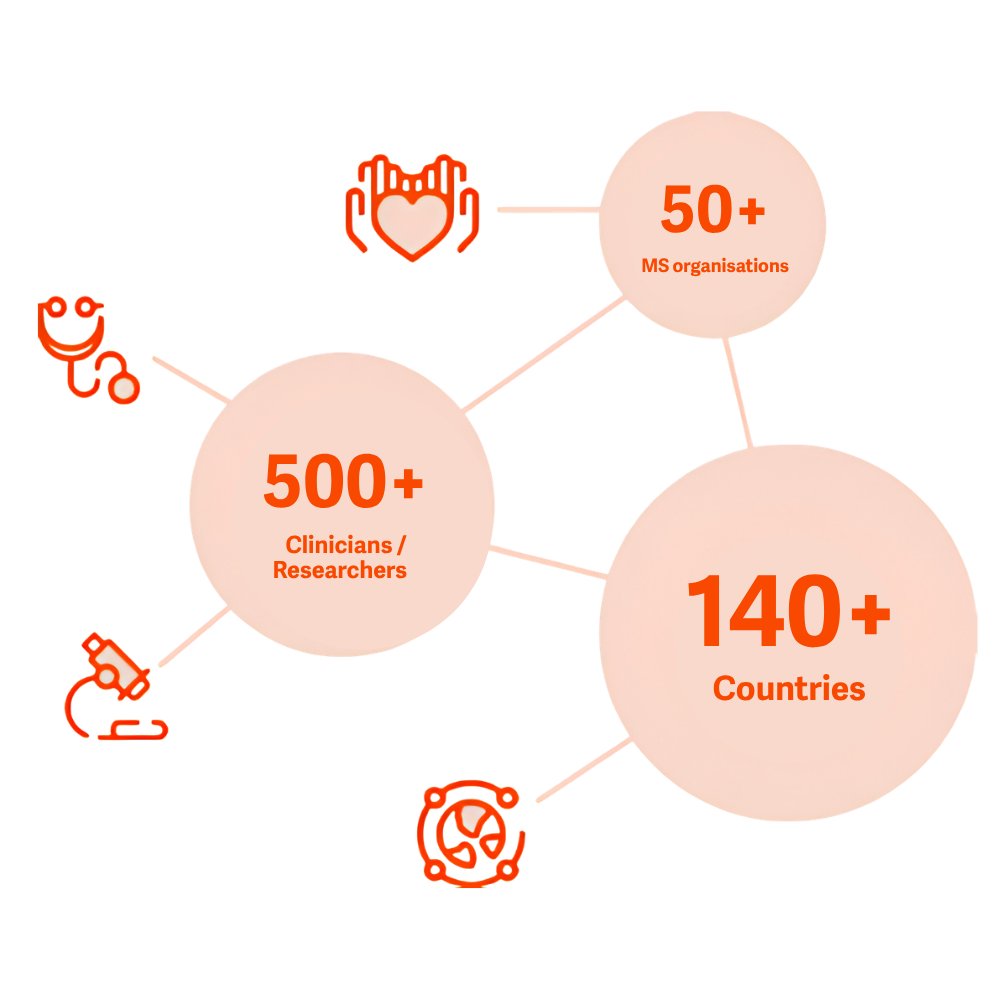

The Atlas of MS is one of the strongest examples of what the global MS movement can achieve through collaboration. By bringing together evidence from countries around the world, it helps inform policy, strengthen advocacy and guide future investment in research and healthcare. The Atlas also highlights the need for continued investment in surveillance, registries and data systems to strengthen our understanding of the true burden of MS. Better data lead to better decisions and, ultimately, better outcomes for people affected by MS worldwide.
Professor Mario Alberto Battaglia
Chair, MS International Federation (MSIF) and President of the Italian MS Society (Associazione Italiana Sclerosi Multipla [AISM])