
What is the Atlas of MS?
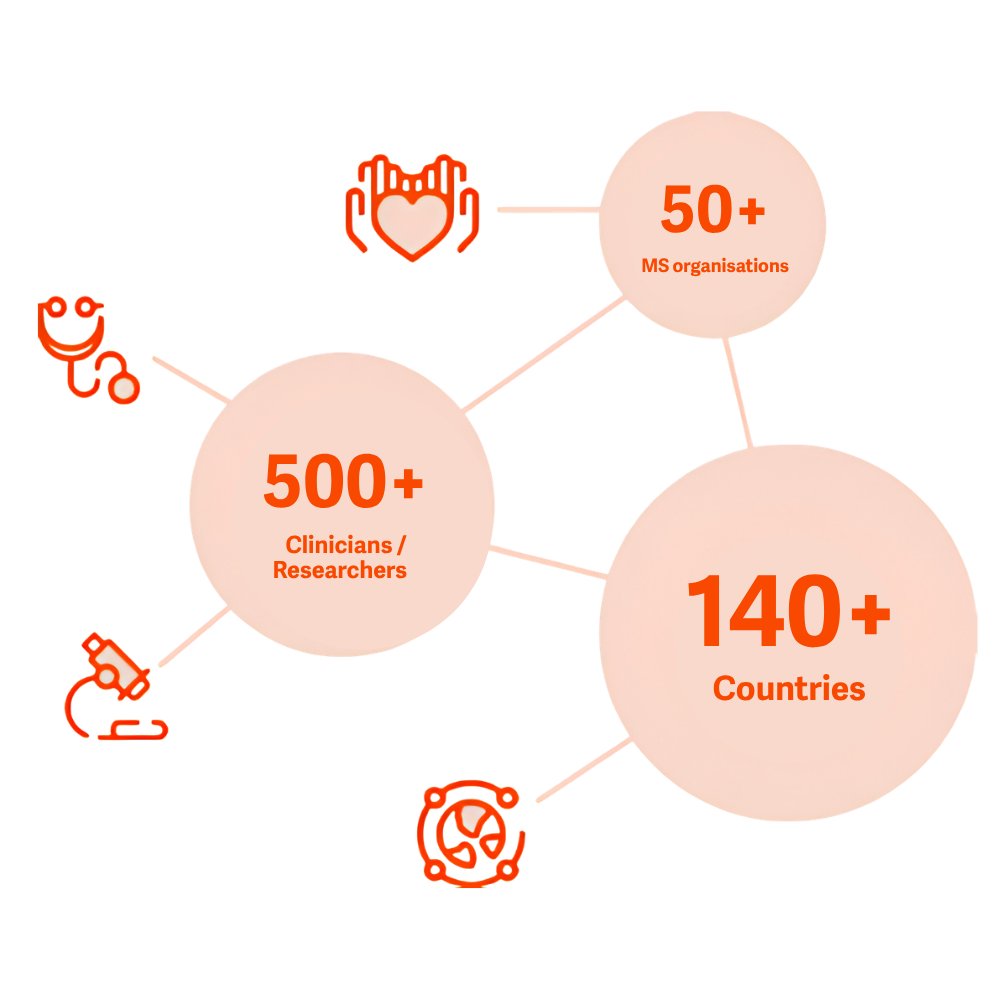
The Atlas of MS is the most comprehensive worldwide study of the epidemiology of MS and the global availability and accessibility of resources for people with MS.
| Country of Interest:
|
||||
| % of people treated with each DMT | % using each DMT in country of interest? | World Bank category Upper middle income | WHO region European | Global results |
|---|---|---|---|---|
| Of the people with MS on DMTS, the proportion using each DMT | ||||
| Alemtuzumab | Not used | 1% | 2% | 1% |
| Azathioprine | Not used | 1% | 1% | 1% |
| Cladribine (subcutaneous or IV) | Not used | 0% | 0% | 0% |
| Cladribine (oral) | Not used | 3% | 3% | 2% |
| Cyclophosphamide | not used | 0% | 0% | 0% |
| Dimethyl fumarate | not used | 6% | 21% | 19% |
| Diroximel fumarate | not used | 0% | 0% | 0% |
| Fingolimod | not used | 23% | 12% | 13% |
| Fludarabine | not used | 0% | 0% | 0% |
| Glatiramer acetate | Used - but unsure of % | 7% | 11% | 10% |
| Interferon-beta 1a | Used - but unsure of % | 10% | 10% | 11% |
| Interferon-beta 1b | Used - but unsure of % | 6% | 6% | 6% |
| IV Immunoglobulin (IVIG) | Used - but unsure of % | 0% | 0% | 0% |
| Leflunomide | not used | 2% | 0% | 0% |
| Methotrexate | Used - but unsure of % | 0% | 0% | 0% |
| Minocycline | not used | 0% | 0% | 0% |
| Mitoxantrone | not used | 0% | 0% | 0% |
| Monomethyl fumarate | not used | 0% | 0% | 0% |
| Mycophenolate mofetil | not used | 1% | 0% | 1% |
| Natalizumab | Used - but unsure of % | 4% | 8% | 7% |
| Ocrelizumab | not used | 8% | 10% | 8% |
| Ofatumumab | not used | 0% | 0% | 0% |
| Ozanimod | not used | 0% | 0% | 0% |
| Peginterferon-beta 1a | not used | 2% | 3% | 3% |
| Ponesimod | not used | 0% | 0% | 0% |
| Rituximab | Used - but unsure of % | 5% | 3% | 5% |
| Siponimod | not used | 7% | 1% | 1% |
| Teriflunomide | not used | 15% | 9% | 10% |
Please note percentages are rounded to the nearest whole number. This means that DMTs with less than 0.5% use will show as 0% in our data,. Only 57 countries were able to provide estimates for this question and the data is highly variable within World Bank categories and WHO regions, with many outliers.
The Atlas of MS is the most comprehensive worldwide study of the epidemiology of MS and the global availability and accessibility of resources for people with MS.

Access the latest Atlas of MS reports, infographics, slides and datasets to support research, advocacy and policy development. Planning an analysis or publication? Contact the Atlas team at [email protected] for guidance on methodology, data interpretation and related work.

The information in the Atlas of MS can be a powerful advocacy tool, shining a spotlight on MS and raising awareness of the lack of adequate resources available to diagnose, inform, treat, rehabilitate and support people with MS worldwide.
The Atlas of MS relies on data supplied by MS organisations from around the world. We are most grateful to the country coordinators and their colleagues for taking the time and effort to gather the information and data.

The Atlas of MS is one of the strongest examples of what the global MS movement can achieve through collaboration. By bringing together evidence from countries around the world, it helps inform policy, strengthen advocacy and guide future investment in research and healthcare. The Atlas also highlights the need for continued investment in surveillance, registries and data systems to strengthen our understanding of the true burden of MS. Better data lead to better decisions and, ultimately, better outcomes for people affected by MS worldwide.
Professor Mario Alberto Battaglia
Chair, MS International Federation (MSIF) and President of the Italian MS Society (Associazione Italiana Sclerosi Multipla [AISM])